Trending

Most people who walk into a casino or open a betting app believe they're playing against the house. They're wrong, or at least half wrong. You're playing against a number — a small, relentless percentage baked into every spin, every hand, every bet slip. Understand that number and you stop being a mark. Ignore it and the math will quietly harvest your bankroll one unit at a time.
This isn't a lecture about gambling being bad. It's a breakdown of how the games actually work, where the edges hide, and what separates players who last from players who don't.
Every regulated game publishes its theoretical return to player (RTP). Online slots typically sit between 94% and 97%. European roulette runs at 97.3%. Blackjack with basic strategy can push 99.5%. Those numbers aren't marketing fluff; they're mathematical certainties over millions of spins and hands.
What most players miss is that the edge compounds against volume, not against any single bet. A 3% house edge doesn't mean you lose 3% tonight. It means that over 10,000 spins at $1 each, the expected loss is roughly $300. Short sessions can swing wildly in either direction. Long sessions almost never do. The casino doesn't need you to lose every time — it just needs you to keep playing.
A 96% RTP slot sounds great until you realize that figure assumes infinite play. In practice, two slots with identical RTP can feel completely different depending on volatility. A low-volatility slot pays small amounts frequently — think 0.5x to 5x your stake. A high-volatility slot might go 300 spins without a meaningful win, then drop a 500x multiplier.
If you have a $100 bankroll and want a two-hour session, low volatility is your friend. If you're chasing a single big hit and don't mind busting fast, high volatility gives you that shot. Neither is "better" — they're different tools for different goals.
Also watch for max win caps. Some high-volatility slots advertise 50,000x potential but cap the actual payout at $250,000 regardless of your bet size. If you're betting $10 a spin and hit the theoretical max, the cap matters. For more on this, see dana slot.
Buying free spins or a bonus round directly usually costs 50x to 100x your base bet. The RTP on the bought feature is often slightly lower than the base game — sometimes 1% to 2% worse. You're paying for variance compression and instant gratification, not value. Occasionally a provider offers a buy feature with a higher RTP than base play; those are worth hunting for.
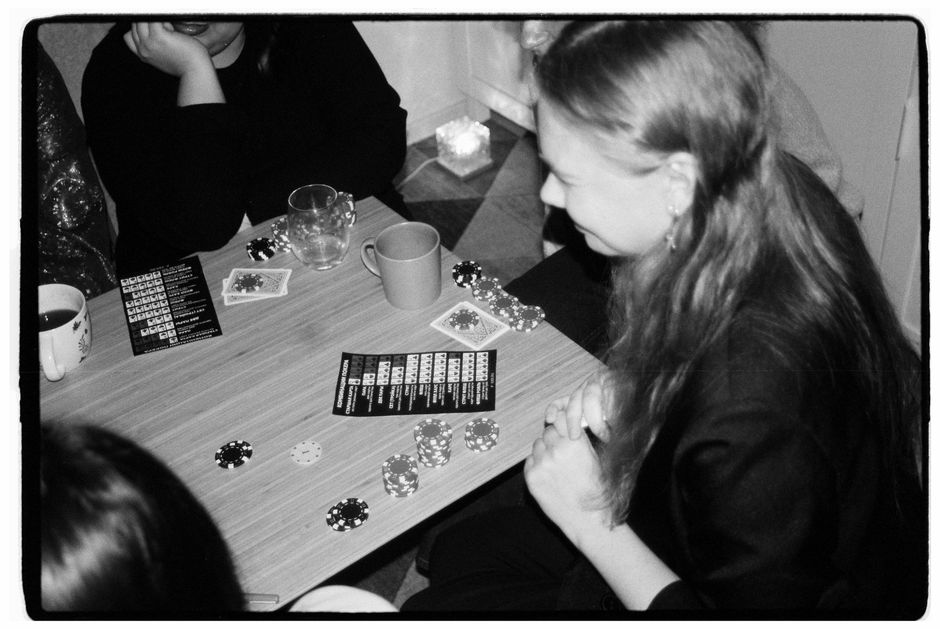
Poker is different. The house takes a rake — typically 5% of the pot up to a cap — and then steps out of the way. Your profit comes directly from opponents' mistakes. That means table selection matters more than hand selection on some nights. Sitting at a table full of solid regulars is a slow bleed. Sitting with three recreational players who limp every hand and chase draws is a license to print.
The most common leak among casual players is playing too many starting hands. In no-limit hold'em, tight-aggressive play — roughly 20% to 25% of starting hands in a full-ring game — beats loose-passive play over any meaningful sample. Patience isn't boring; it's profitable.
A standard spread bet at -110 means you risk $110 to win $100. That's a 4.55% implied vig per side, and roughly 4.76% total if you bet both sides of a fair line. Winners don't beat the bookmaker by predicting outcomes — they beat it by finding mispriced lines before the market corrects.
That's why line shopping isn't optional. A half-point difference on a key number (like 3 or 7 in NFL spreads) swings thousands of dollars over a season. If you're betting without comparing odds across at least three books, you're donating margin you didn't need to give up.
No system, no pattern, no gut feeling survives contact with the math. What does survive is discipline. The players who last treat their bankroll like a budget, not a lottery ticket.
There's a weird freedom in accepting that the house edge exists. Once you stop fighting it, you can start managing it. You pick games with lower edges, you exploit soft tables, you shop lines, and you walk away when the session is over. That's not luck. That's the job.
The best players in any igaming vertical — slot grinders, poker pros, sharp bettors — all share the same trait: they know exactly what their edge is on any given play, and they refuse to play when there isn't one. Everyone else is just renting entertainment at a price they haven't calculated yet.
Figure out your numbers. Write them down. Then decide if the price is still worth it. Most of the time, the honest answer is more interesting than the fantasy.